

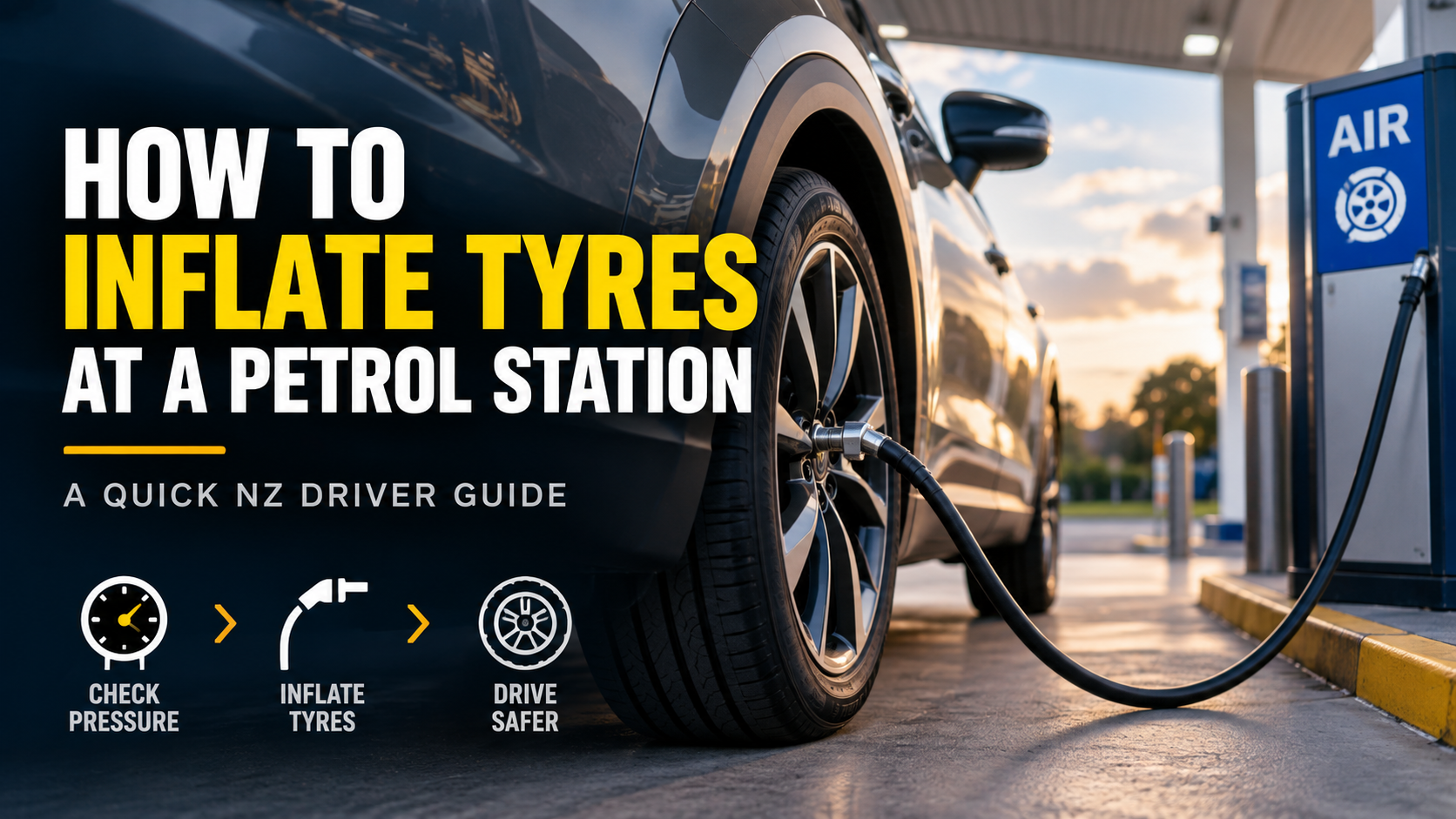
How to Inflate Tyres at a Petrol Station in New Zealand
Keeping your tyres at the correct pressure is an important part of basic car maintenance. Proper tyre pressure can help improve fuel efficiency, tyre life, handling and overall road safety.
The good news is that checking and inflating your tyres is quick and easy. Many petrol stations across New Zealand have air pumps available, and the whole process usually takes only a few minutes.
If you have never used a petrol station air pump before, here is a simple step-by-step guide.
What Tyre Pressure Should Your Car Have?
Before adding air, you need to know the correct tyre pressure for your vehicle.
You can usually find the recommended tyre pressure on a sticker inside the driver's door or door frame. It may also be listed in the owner's manual or, on some vehicles, inside the fuel flap.
Tyre pressure is normally shown in PSI or kPa.
The correct pressure varies depending on your vehicle, tyre size and load. Some vehicles may also require different pressures for the front and rear tyres.
It is important to follow the vehicle manufacturer's recommended pressure rather than the number printed on the sidewall of the tyre. The sidewall figure is generally related to the tyre's maximum pressure and is not necessarily the correct everyday pressure for your car.
How to Inflate Your Tyres at a Petrol Station
Once you know the correct tyre pressure, using the air pump is straightforward.
Park close to the air pump
Park your car close enough so the air hose can comfortably reach all four tyres.Check the recommended tyre pressure
Confirm the correct PSI or kPa before you start.Remove the valve cap
Unscrew the small cap from the tyre valve and keep it somewhere safe.Set the required pressure
If the machine is digital, use the controls to select the correct pressure for your vehicle.Connect the air hose
Push the hose connector firmly onto the tyre valve. You may hear a brief hiss of air when connecting it.Wait for the tyre to reach the correct pressure
Many modern machines automatically add or release air until the selected pressure is reached. Some machines will beep when the tyre is ready.Remove the hose and replace the valve cap
Disconnect the hose and screw the valve cap back on.Repeat for the remaining tyres
Check all four tyres, even if only one appears to be low.
Should You Check Tyre Pressure When the Tyres Are Cold?
For the most accurate reading, tyre pressure should ideally be checked when the tyres are cold.
Driving causes tyres to heat up, which can temporarily increase the pressure inside them. For this reason, checking your tyres before a long drive is usually best.
However, if you notice a tyre is significantly underinflated while you are already on the road, it is still better to correct the pressure than continue driving on a low tyre.
How Often Should You Check Your Tyre Pressure?
A good habit is to check your tyre pressure around once a month.
It is also worth checking before a long road trip, before carrying a heavy load, if one tyre looks lower than the others, or if your tyre pressure warning light appears.
Regular checks only take a few minutes and can help reduce unnecessary tyre wear.
Don't Forget the Spare Tyre
Your spare tyre can slowly lose pressure even when it is not being used.
It is a good idea to check it every few months, especially before a long trip.
Some spare tyres require a different pressure from your normal tyres, so always check the manufacturer's recommendation first.
What If a Tyre Keeps Losing Air?
If a tyre becomes low again shortly after you inflate it, there may be an underlying issue.
Common causes include a puncture, a nail or screw in the tyre, a leaking valve, damage to the wheel or damage to the tyre itself.
Repeatedly adding air is not a permanent solution. If the tyre continues losing pressure, have it inspected by a tyre shop or mechanic as soon as possible.
Final Thoughts
Learning how to inflate your tyres at a petrol station is a simple but useful skill for every driver in New Zealand.
Keeping your tyres at the correct pressure can help improve fuel efficiency, tyre life, vehicle handling and road safety. Making tyre pressure checks part of your regular car maintenance routine can help prevent problems before they become more serious.